
Treatment is always led by a vet. This guide helps you find your way; it does not replace an examination.
Did it happen suddenly? Go to a vet now.
Sudden weakness or paralysis of the hind legs is an emergency. With some causes, such as a slipped disc, hours decide whether the dog will stand again.
- Carry the dog carefully and support its back. A small dog in a carrier, a larger one on a flat, firm surface. Do not lift it by the front legs or by the belly alone.
- Restrict movement. No jumping, stairs or running around the flat.
- Do not give human medicines. Many are dangerous for dogs and can complicate treatment.
- At night or at the weekend, call an emergency veterinary service.
The first weeks at home
Once the diagnosis and treatment are clear, everyday care begins. Most of what frightens you today will be routine in a few weeks. These things, though, need watching from day one.
Urine and stool
A paralysed dog often cannot empty its bladder, even if urine dribbles out. Retained urine leads to infections and other complications. Ask your vet to show you how to express the bladder and how often. It is a skill most owners learn.
Soft bedding and turning
A dog that cannot turn itself easily develops pressure sores. A thick, soft bed, regular turning as your vet advises and a daily check of the places where skin meets the bed (hips, elbows, knees) all help.
Hygiene
Urine and stool irritate the skin. Wash the hindquarters, dry them thoroughly and keep the coat around the rear and groin shorter. Dog nappies help indoors but need changing often, or the skin becomes sore.
Dragging paws
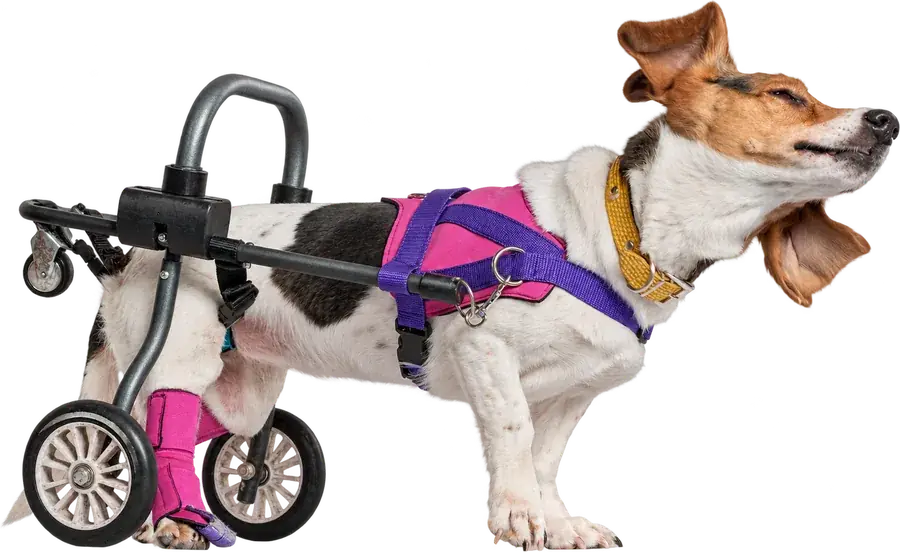
If the dog drags its hind legs, it scrapes its toes and the tops of its paws. Dog boots or non-slip socks protect them, and later a wheelchair.
A home without slippery floors
On tiles and wooden floors a dog with weak legs cannot brace itself. Runners and rugs along the routes it uses give it confidence back. Block the stairs with a gate for now.
Rehabilitation: don't wait for it to improve by itself
Unused muscles waste quickly and joints stiffen. It makes sense to begin rehabilitation as early as possible, but only once the treating vet approves. A veterinary physiotherapist builds a plan from the diagnosis: passive exercise, massage, underwater treadmill work or balance exercises. At home you do only what you have been shown. Read more in Rehabilitation and hydrotherapy.
When a wheelchair comes in
A wheelchair is not the first step, but for many dogs it is the one that gives walks back. Your vet or physiotherapist decides when the time is right. See Dog wheelchair: when it helps and how to choose one.
You matter too
A dog does not think about disability the way a person does. It does not grieve for what it can no longer do. It cares whether you are there, whether it is fed and whether it goes out. For the owner it is a hard time: less sleep, more worry, questions with no one to ask. That is what we are here for. Write to us; we will tell you what to focus on, and if you need support with rehabilitation, we will see how we can help.
If you are weighing up your dog's quality of life, talk openly with your vet. Pain, appetite, interest in surroundings and pleasure in your company are a better measure than whether the dog walks unaided.
Frequently asked questions
Can a paralysed dog walk again?
It depends on the cause, the extent of damage to the spinal cord or nerves and how quickly treatment begins. Some dogs stand again after surgery and rehabilitation; others learn to live with a wheelchair. Your vet can answer for your dog after an examination.
Is a paralysed dog in pain?
Paralysis does not have to mean pain. With good care (toileting, hygiene, soft bedding and movement) a dog can live contentedly. If the dog shows pain, refuses food or loses interest in its surroundings, see your vet.
Which breeds are more prone to spinal problems?
Slipped discs are more common in breeds with long backs and short legs, such as Dachshunds, Basset Hounds, French Bulldogs, Pekingese, Shih Tzus and Beagles. Any dog can be paralysed, for example after an injury.
How long does rehabilitation take?
From a few weeks to months, sometimes lifelong as maintenance. The diagnosis and the dog's response determine the length. A veterinary physiotherapist sets and adjusts the plan.
What if my dog cannot urinate?
Have your vet show you how to express the bladder and agree how often. Do not underestimate retained urine; it can lead to a urinary tract infection.