
Treatment is always led by a vet. This guide helps you find your way; it does not replace an examination.
When rehabilitation helps
Veterinary rehabilitation (physiotherapy) makes sense wherever a dog has lost strength, mobility or confidence in movement. Most often:
- after spinal surgery, for example for a slipped disc,
- after joint and ligament surgery (knee, hip, elbow),
- with neurological conditions, when the dog coordinates its legs poorly,
- after amputation, so the remaining legs and core cope with the extra load,
- with arthritis and weakening muscles in older dogs.
The treating vet decides when to start. After surgery the first step is usually gentle and short, and the load is added gradually.
What it involves
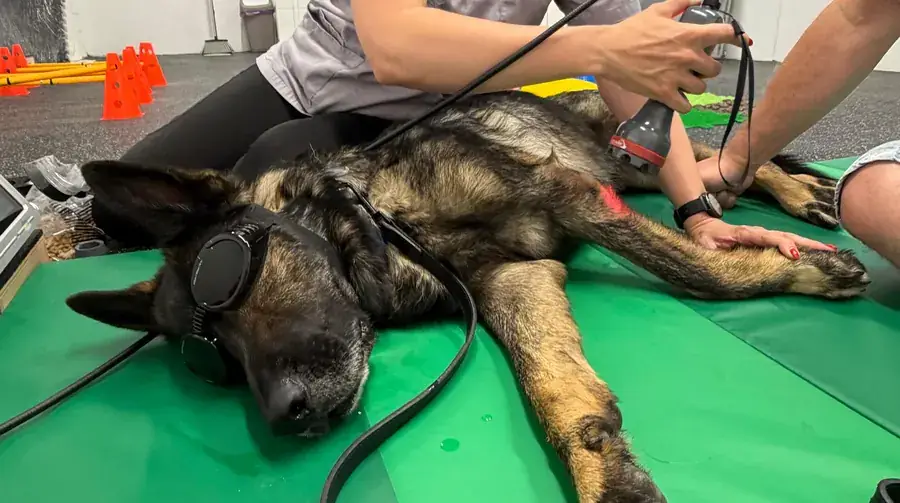
A veterinary physiotherapist builds the plan from the diagnosis and how the dog copes with exercise. It usually combines several methods:
- Exercise and passive movement keep joints mobile and gradually return strength to the muscles.
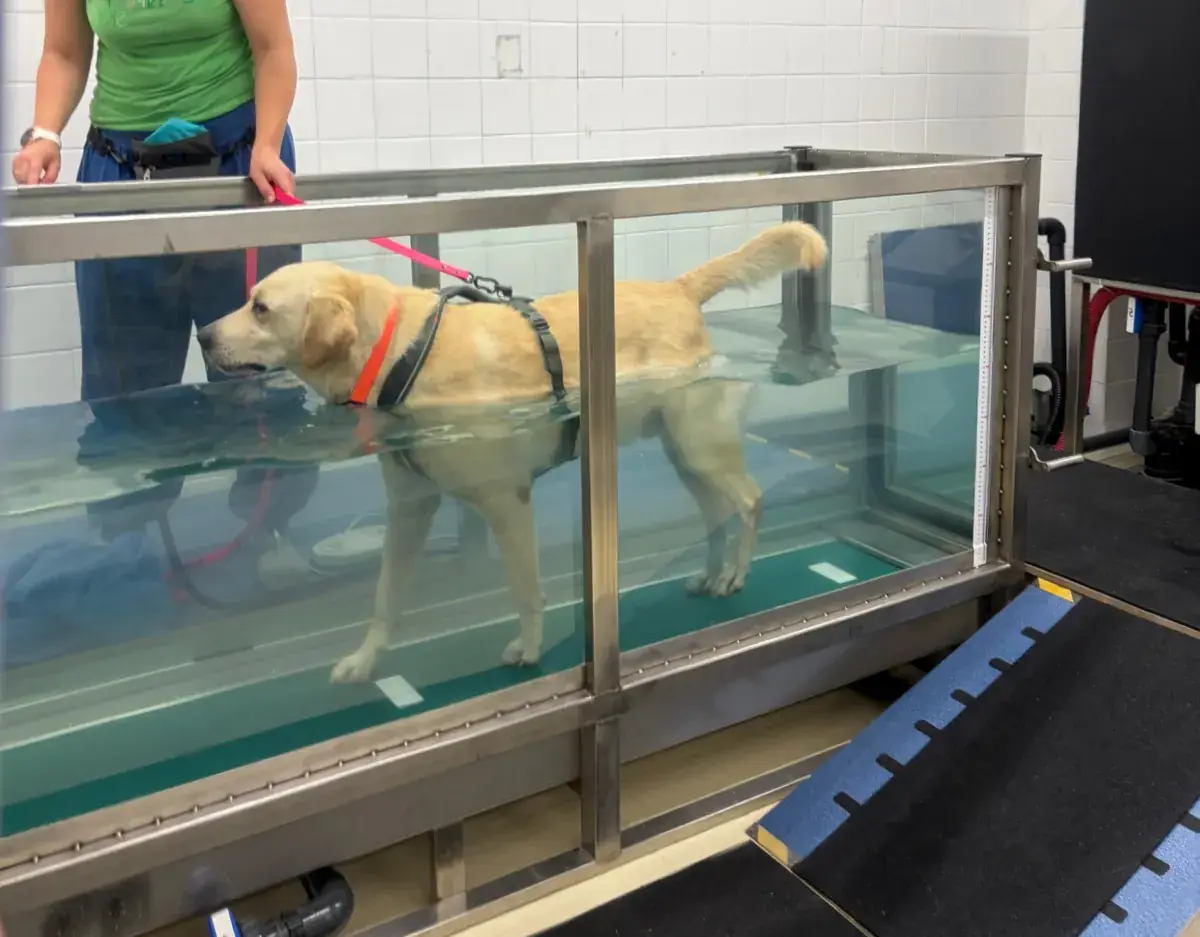
- Hydrotherapy on an underwater treadmill. Water supports the dog, so joints and spine carry less load, while its resistance makes the muscles work.
- Balance exercises on pads and boards teach the dog to trust its legs again.
- Massage and soft-tissue techniques release stiff muscles that the dog overloads when compensating.
- Laser therapy is used as a complementary method. Your vet decides whether it suits your dog.
- A home programme. Short exercises your physiotherapist shows you make a real difference between visits.
How long it takes
From a few weeks to months. With chronic conditions such as arthritis, rehabilitation becomes long-term maintenance. The physiotherapist sets the frequency of visits and adjusts it as the dog progresses.
How we help
HEMI supports rehabilitation for shelter dogs and helps those who need it. Rehabilitation and hydrotherapy are provided by Veterina Inak Centrum in Bratislava.
- Write to us at zdruzenie.hemi@gmail.com with a short description of the diagnosis. Owners and shelters can both get in touch.
- Attach the report from your vet. If we need anything else, we will ask for it.
- We look at every request individually. How much we can help depends on how much money the association has in its account at the time.
Frequently asked questions
Is rehabilitation painful for a dog?
It should not be. The physiotherapist matches the load to what the dog can manage and watches for signs of pain. If the dog limps or is restless after exercise, tell the physiotherapist.
Do I need a referral from a vet?
Rehabilitation should follow a veterinary diagnosis. After surgery in particular, the treating vet always decides when to start and with what load.
How often should a dog have hydrotherapy?
It depends on the diagnosis and the stage of treatment. Sessions are usually more frequent at first and then spaced out. The physiotherapist sets the plan.
How much does HEMI contribute?
We look at every request individually. How much we can contribute depends on how much money the association has in its account at the time.
Can a shelter ask for help?
Yes. We help shelter dogs as well as dogs that have an owner. Write to us about the dog and its diagnosis.
Do you help people outside Bratislava?
We can advise anyone in Slovakia. The rehabilitation we contribute to takes place at Veterina Inak Centrum in Bratislava.